Deployment concept
This chapter covers the short path from a newly deployed appliance to a working load balanced service. It sets out the steps in the order they need to be performed, then works through a complete example that can be followed from start to finish. Each step links to the chapter that covers it in full, so the chapter also serves as a checklist for anyone already familiar with the appliance.
If any of the terminology used here is unfamiliar - Floating IP, Virtual Service, Real Server, frontend, backend and so on - see Loadbalancer.org Terminology.
Once the load balancer is deployed, clients connect to the Floating IP (FIP) / Virtual Service on the load balancer rather than connecting directly to one of the Real Servers. Requests are then distributed across the Real Servers according to the load balancing algorithm selected.
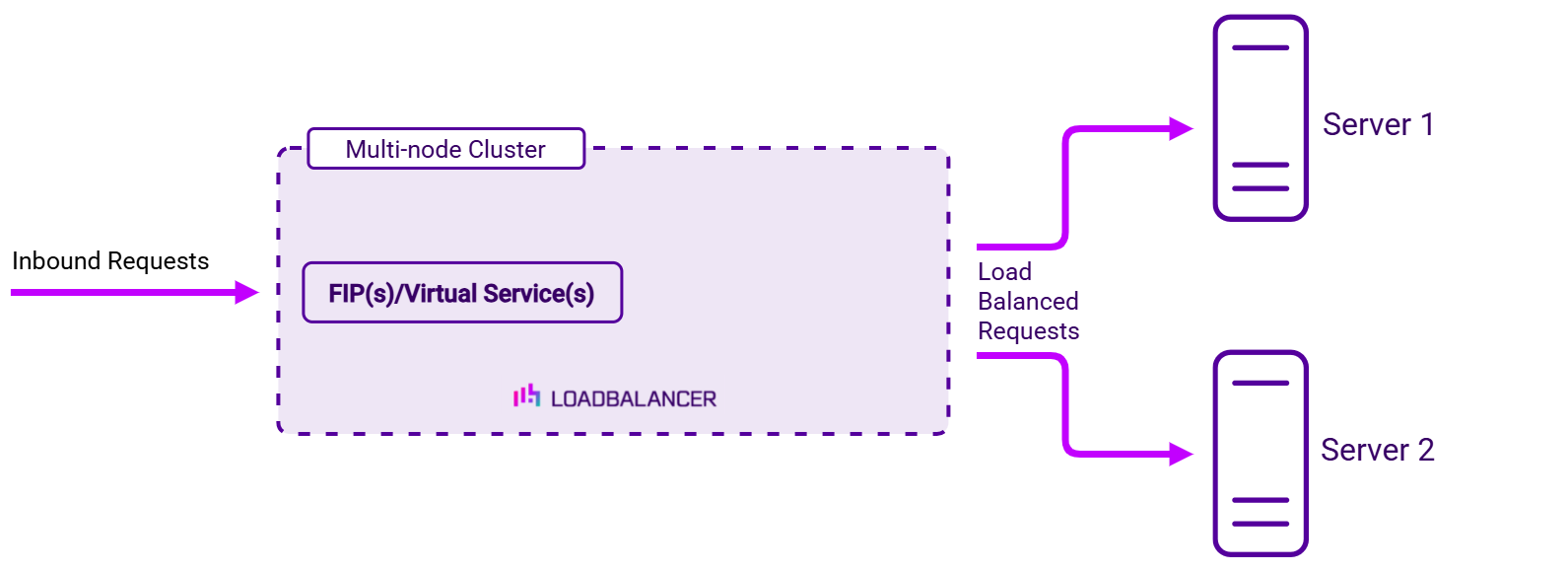
The appliance can be deployed in a one-arm or a two-arm topology, and each service can use a different load balancing method. For an explanation of the options and how to choose between them, see Concepts.